|
AGS Mission Statement
Benefits of GS
Formulations of GS
Games and exercises
AGS Library
AGS publications
Contact, Join
AGS
Meetup site
AGS FaceBook
site
Other GS sites
"The reality we manage to get into our heads is largely that reality which is abstracted through our symbol systems."
Anon
Time-binding:
"The uniquely human ability to build on the accumulated knowledge of others, potentially to an exponential degree."
General-Semantics...
" ...teaches us how symbols are related to experience so as to make it less likely that we take too seriously the absurd or dangerous nonsense that within every culture passes for philosophy, wisdom, and political argument."
Aldous Huxley
"Experience
shows that when the methods of general semantics are applied, the results are usually beneficial, whether in law, medicine, business, etc., be they in family, national, or international fields. If they are not applied, but merely talked about, no results can be expected."
Alfred Korzybski
|
|

|
|
The Australian General Semantics Society (AGS)
is an incorporated association, first established in 1989 by
Laurie Cox.
We are located in Sydney, Melbourne and Canberra, Australia.
Our resources include:
* Seminars in-person and on-line, on the foundations and application
of GS,
* Discussion groups: to participate in further study of General-Semantics,
* A library of hundreds of books, articles, and various media on GS,
* Affiliation and correspondence with the Institute for General Semantics,
* Friendly, energetic, active people leading focussed and engaged
lives.
|
Meetings are mostly held on-line.
Details are published on
this website.
Contact
AGS
Due to changing circumstances, event schedules may change.
Email reminders are sent about 10 days before each
event. |
~ Recent Additions to the AGS Website
~
Our last seminar :
Jaison Tremain:
Reflections n J. S. Bois's book "The Art of Awareness"
<See the video recording>
(Details available in the Archive, to the right)
|
Our
Last
Meeting:
Saturday 15th
August 2026 10am Sydney time
(Friday 14th April 8pm
US Eastern time)
"Creative Problem Solving
- Unlock
your
Creative
Potential"
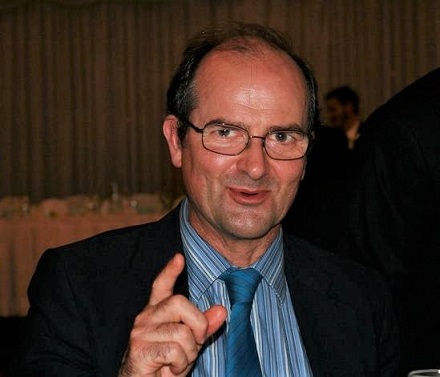
Presenter:
David Hewson
 Learn
to transform the
way you solve
problems,
develop
innovative
thinking,
effective
problem solving,
and practical
skills for
tackling
problems
confidently. Learn
to transform the
way you solve
problems,
develop
innovative
thinking,
effective
problem solving,
and practical
skills for
tackling
problems
confidently.
This
Creative Problem
Solving seminar
is designed to
unlock your
innovative
thinking, boost
your creativity,
and equip you
with practical
tools to tackle
almost any
problem.
Whether you
are a
professional,
entrepreneur,
student,
politician or
lifelong
learner, it
offers hands on
activities, real
world examples,
with guidance to
unlock your
creative
potential.
Come and
learn how to
think outside
the box and turn
problems into
opportunities.
Join us on
the 15th of
August and start
your journey
toward becoming
a more
effective,
efficient and
inventive
thinker!
Where:
Zoom meeting:
Covid and 'flu
safe:
Join Us by Zoom!
Cost:
Free for Zoom
participants.
Then ... our
Annual General
Meeting
Reports, Reviews
and
Remonstrations,
and election of
Offfice Bearers
* Rachel Lauer’s
Stages of understanding.
(Details TBA)
* Timebinding - its
formulation, implications
and trends.
"Fools say that they learn
by experience. I prefer to
profit by other's
experience." (Bismarck).
An
example of timebinding off
others that have gone
before.
* RJ's un-Pula GS
Glossary (under
construction):
A collaborative project,
incorporating 20 years of
AGS
studies and
discussions.
* Baby Boomers in
Popular Culture
How can we keep
up with technology
and
dynamic culture,
and
engage with our children and
their children?
Are
Korzybski’s extensional
devices sufficient,
or do
we need some new ones?
* Ed MacNeal's
"General Semantics - Then
and Now"
Edward MacNeal
held the position of
executive secretary of the
International Society for
General Semantics in the
late 1940s, works as an
aviation consultant, and has
written several notable
books, including The
Semantics of Air Passenger
Transportation;
Mathsemantics: Making
Numbers Talk Sense; and
MacNeal's Master Atlas of
Decision Making (published
1997).
* Science without Soul
On 13th
November 2020,
IGS
Secretary Vanessa
Biard-Schaeffer
addressed the Italian Senate
for the celebration of the
UN 2020 Philosophy Day,
on the theme “Science
Without Soul.”
* More of Marty
Levinson's 'Modern Fairy
Tales
What
significance can we draw
from these?
Why are the
'traditional' fairy tales so
durable?
Is there a
possible role for new
fictional creations in GS?
* "Examples of GS
Formulations in the Media"
(by
Dion, held-over from 21 May
1999)
Clips from
movies/cartoons/comedy
shows, etc,
that
extensionally show up some
problems
like
fact-inference confusion
(jumping to conclusions) ...
|
Past Activities
Archive
2026
2025
2024
2023
2022
2021
2020
2019
2018
2017
2016
2015
2014
2013
2012
2011
2010
2009
2008
2007
2006
2005
2004
2003
2002
2001
2000
|